


What Is Zone 0?
Zone 0 refers to the first 0–5 feet surrounding any structure located within a Very High Fire Hazard Severity Zone (VHFHSZ) in California.
This is the most critical area for wildfire defense because it is where embers and radiant heat are most likely to ignite vulnerable materials.
New regulations typically require:
- Structural hardening measures
- Removal of combustible materials
- Creation of non-combustible defensible space
When Do Facilities Need to Comply?
Enforcement timelines include:
- January 2025: CDPH enforcement for all new construction in VHFHSZ areas
- January 2026: Enforcement for existing licensed facilities
If your facility is in a designated VHFHSZ, it’s smart to begin planning, budgeting, and coordination now — well before inspection season.
What Does “Hardening” Zone 0 Look Like?
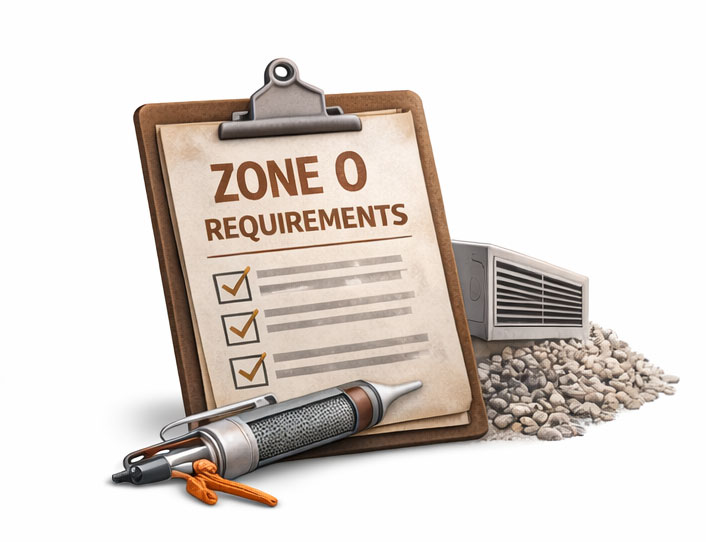
Zone 0 hardening involves reducing ignition risk immediately adjacent to structures. This may include:
- Removal of combustible materials within 0–5 feet of buildings
- Installation of non-combustible ground coverings (gravel, concrete, pavers)
- Fire-resistant mesh on vents
- Sealing gaps and penetrations to block ember intrusion
- Ensuring embers cannot accumulate under decks or stairs
- Modification or removal of combustible attachments (fences, gates, sheds, trellises)
What Is Typically Allowed in Zone 0? (Exceptions)
Certain items may be allowed within Zone 0 — but only under specific conditions and often with AHJ approval.
Potted Plants
- Heavy ceramic or terracotta pots
- Placed on non-combustible surfaces
- Vegetation must be well-maintained
- Avoid clustering
Succulent Gardens
- Fully hydrated, non-combustible plants
- Adjacent mulch should be gravel or hardscape
Patio Furniture
- Metal or heavy-duty wood furniture
- Fire-resistant cushions
- Cushions removed or covered overnight
Decorative Statues & Fountains
- Stone or other non-combustible materials
Utility & Relaxation Features
- Non-combustible raised garden beds
- Heat pumps and utility boxes
- Grills with metal lids kept tightly closed
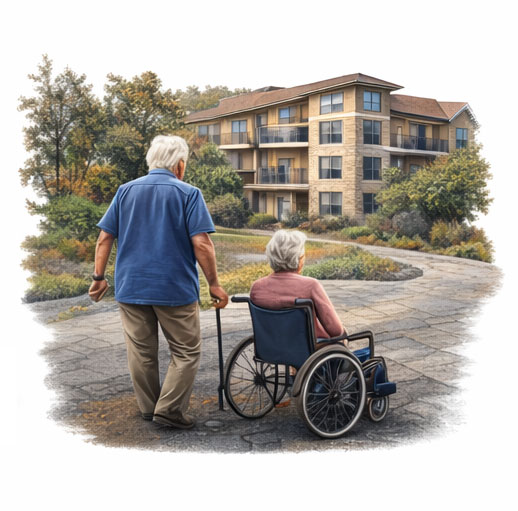
Why Senior Living Communities Face Greater Risk
- Residents may have mobility limitations
- Evacuation timelines are longer
- Inspections are more frequent
- Regulatory oversight is stricter
Zone 0 compliance is not just landscaping — it is a life safety measure that supports inspection readiness and resident protection.

FSSC Zone 0 Wildland Fire Mitigation Program
1. Full Compliance Assessment
Identify vulnerabilities within the first 0–5 feet of your property.
2. Program Development
Develop documentation, policies, and staff training materials necessary for compliance.
3. AHJ Coordination Support
Coordinate with Fire Marshals, CAL FIRE, CDPH, local Fire Chiefs, and inspectors.
4. Education & Training
Educate staff and residents on inspection expectations and wildfire safety standards.
5. Ongoing Retainer-Based Consulting
Prepare for annual inspections and maintain proactive wildfire safety throughout the year.